1. Fun facts about rice in Vietnam
1.1. Rice cultivation in Vietnam dates back over 4,000 years
Rice in Vietnam goes way back to prehistoric times. The practice of rice cultivation developed into a sophisticated civilization that laid the foundation for the entire history of Vietnam. Ancient Vietnamese communities built elaborate irrigation systems and developed farming techniques that are still used today. The extensive work passed down from generations allows rice from Vietnam to evolve beyond agriculture and become a fundamental part of the nation's identity.

1.2. The Vietnamese language has many words to describe rice
While English just has one word "rice," the Vietnamese language uses around 11 different terms to describe this grain at various stages and how it can be prepared. Mạ is for rice seedlings, lúa for growing plant, thóc for unmilled rice, gạo for milled rice, and cơm for cooked rice. Then there's cốm (green rice), nếp (glutinous rice), tấm (broken rice), tẻ (ordinary rice), lứt (brown rice), and mẻ (fermented rice). This linguistic richness shows just how deeply rice of Vietnam is embedded in the local culture.
1.3. Rice is deeply tied to Vietnamese culture
Rice in Vietnam can be found everywhere, not just on plates. Dishes featuring rice often make an appearance on altars and in major occasions like Tet, birthdays, weddings, and everything in between. Banh chung and banh giay, two legendary rice cakes in Vietnam, symbolize the earth and the sky in Vietnamese culture, respectively.
Rice also shows up in everyday greetings. Instead of just saying "hello," Vietnamese people often ask "Ăn cơm chưa?" which literally means "Have you eaten (rice) yet?" You will also hear sayings like "buồn như mất sổ gạo" (sad as losing your rice ration book) or "no cơm ấm áo" (full belly, warm clothes) that express emotions and life situations.

1.4. Rice is grown almost everywhere in Vietnam
If you travel around Vietnam, you will see rice pretty much everywhere you go. Every city and province produces rice to some degree. Kien Giang is leading the pack, followed by An Giang, Long An, and Dong Thap, all located in the Mekong Delta region.
Speaking of which, Vietnam has two massive rice production areas: the delta of the Red River in the north and the Mekong Delta in the south. The Mekong Delta is huge, covering about 40,816 square kilometers, nearly double the size of the Red River Delta at 21,260 square kilometers. This region is the real powerhouse, supplying over 50% of rice in Vietnam and a whopping 90% of Vietnam's rice exports.
1.5. Vietnam is one of the world's top rice exporters
Rice in Vietnam has a major standing in the global market. In 2024, the country held its position as one of the top three rice exporters worldwide for the 2023-2024 crop year with an astounding 7.6 million tons. The reach is impressive too, as rice in Vietnam travels to about 150 countries and territories around the globe.
Now, what exactly is Vietnam shipping out? Premium varieties like Jasmine, Dai Thom, ST24, and ST25 make up about 19% of exports, mainly heading to the EU, United States, China, and Japan. Glutinous rice accounts for 6%, with China and Southeast Asian nations as primary buyers. Then, there is Japonica and other varieties at 4%, mostly going to Japan, Korea, and other markets.

1.6. Vietnam produces some of the finest rice in the world
Rice in Vietnam goes further than quantity. The country grows some of the world's best rice, and it has got the awards to prove it. ST24 and ST25, developed by farmer-scientist Ho Quang Cua and his team, have made it into the top four best rice varieties in Vietnam on the global stage in 2022. In fact, ST25 has won the "World's Best Rice" title multiple times in a worldwide competition hosted in the Philippines in 2019 and 2023.
2. Top activities to explore Vietnam’s rice heritage
2.1. Marvel at breathtaking rice fields
Photos do not do justice to Vietnam’s rice paddies. You need to see them in person to fully appreciate their beauty and the hard work of farmers across the country. Here are some spots that will take your breath away:
- Sapa: The mountainous landscapes make Sapa’s rice fields look like giant green staircases carved into the hillsides. The rice terraces in Vietnam here are especially photogenic during the growing season.
- Mu Cang Chai: If Sapa is impressive, Mu Cang Chai’s rice terraces are absolutely mind-blowing. These rice fields in Vietnam have won recognition as some of the most beautiful in Southeast Asia.
- Pu Luong: Less crowded than Sapa but equally stunning, Pu Luong offers a more tranquil experience with its terraced rice fields set against limestone mountains.
- Ninh Binh: The flat rice paddies of Vietnam around Tam Coc create a different kind of beauty. Ninh Binh’s rice fields, alongside the incredible surroundings, create something right out of a fantasy movie.
- Co To Mountain in An Giang: Down south, these fields offer a unique perspective with their patchwork patterns that look like colorful paintings when viewed from above.

2.2. Savor iconic dishes & drinks made from rice
Rice in Vietnam is basically the backbone of the cuisine, with plenty of Vietnamese rice dishes for people to choose from:
- Broken rice (Com tam): This humble dish uses fractured rice grains that are slightly different in texture, typically served with grilled pork.
- Hoi An chicken rice (Com ga Hoi An): A specialty that showcases how rice can be transformed with herbs and tender chicken.
- Vietnamese beef noodle (Pho bo): Whether you try pho Hanoi or pho Saigon, you are tasting rice in Vietnam in one of its finest forms - silky noodles swimming in aromatic broth.
- Hue beef noodle soup (Bun bo Hue): Thicker rice noodles in a spicy, lemongrass-infused broth that packs a bit more heat than pho.
- Cao lau: Another Hoi An exclusive, these chewy rice noodles in Vietnam are made with water from a specific local well, giving them a unique texture.
- Vietnamese sticky rice cake (Chung cake): This traditional cake made from glutinous rice, mung beans, and pork is essential during the Tet celebration.
- Vietnamese rice wine: Fermented rice creates this potent drink that is central to social gatherings. Rice wine in Vietnam is a favorite in many rural houses, where you may be treated to a glass on your visit.
In addition, there are other varieties of Vietnamese rice cakes, including banh giay, banh beo, banh gio, and more. Other rice noodles in Vietnam such as bun and hu tieu also make their appearance in countless dishes that you can easily find.

2.3. Experience traditional farming life
Want to get your hands dirty while learning about rice in Vietnam? Several places in the country offer authentic rice farming experiences that international visitors absolutely love. In Ninh Binh, tourists happily roll up their pants to wade through muddy fields, learning to plant rice seedlings and even plow with water buffalo. Up in Sapa, visitors can experience the real deal: planting rice, navigating terraced fields, and riding buffalo through mountains. Ha Giang is another hotspot where tourists can try their hand at herding buffalo. In Hoi An, you can join local farmers to pump water and plant rice in Vietnam the traditional way.
2.4. Join vibrant rice festivals
If you time your visit right, you can catch festivals that celebrate the rice season in Vietnam. Like other festivals in Vietnam, you will be able to learn a thing or two about the local culture there.
- Rice praying festivals (Lễ hội cầu mùa): Various ethnic groups, including Thai, Nung, Tay, and Dao, hold ceremonies at the start of the planting season, praying for favorable weather and bountiful harvests. These colorful events feature traditional music, dances, and rituals that have been performed for generations.
- Field opening festivals (Lễ hội xuống đồng): Marking the start of the planting season, these spring festivals involve entire communities coming together. There are processions, blessings, and celebrations that kick off the agricultural cycle with hope and joy.
- New rice festivals (Lễ hội cơm mới): After the harvest, communities gather to celebrate the year's first rice. People prepare special dishes from the new crop and make offerings to ancestors, expressing gratitude for the harvest.

FAQs about rice in Vietnam
What is the price of rice in Vietnam per kilogram?
The price of rice in Vietnam varies depending on the quality. Regular rice typically ranges from about 15,000 to 25,000 VND per kilogram, while premium varieties like ST25 can cost 40,000 VND or more per kilogram. The price also fluctuates based on the season and market condition.
What is the best rice brand in Vietnam?
The best rice in Vietnam is arguably ST25, developed by farmer-scientist Ho Quang Cua and his team. This Vietnamese rice brand has won the World's Best Rice award multiple times, putting Vietnam on the map for premium rice production.
Why is rice important in Vietnam?
Rice is a central part of Vietnam's culture and economy. Culturally, it is woven into festivals and family events. Economically, it is a major source of income and export revenue.
What are the main rice-growing regions in Vietnam?
The Mekong Delta and the Red River Delta are the most productive, with the Mekong Delta supplying the majority of the nation's rice and nearly all exports. You will find rice farms in Vietnam throughout both deltas.
How many rice crops are grown each year in Vietnam?
It depends on where you are in the country. Southern provinces typically plant three crops annually thanks to the warm climate and consistent water supply, while northern provinces usually grow two crops per year.
When is the best time to visit Vietnam’s rice fields?
For lush green rice fields, visit during the growing season from late April to June. If you prefer the golden harvest scene, come in during late September - October. The time in between, from July to August, see the rice terraces in Vietnam gradually changing colors.
Rice in Vietnam has been the identity of the country in ways that go far beyond the dinner table. Whether you are photographing stunning landscapes, learning to plant seedlings with local farmers, or slurping a bowl of steaming pho, you are experiencing a culture built on this humble grain that is nurtured by the hard work of Vietnamese people.
Ready to explore more of what Vietnam travel has to offer? Beyond rice fields, you can discover the limestone wonders of Ha Long, wander the lantern-lit streets of Hoi An, relax on the pristine beaches of Nha Trang, or escape to the tropical paradise of Phu Quoc.
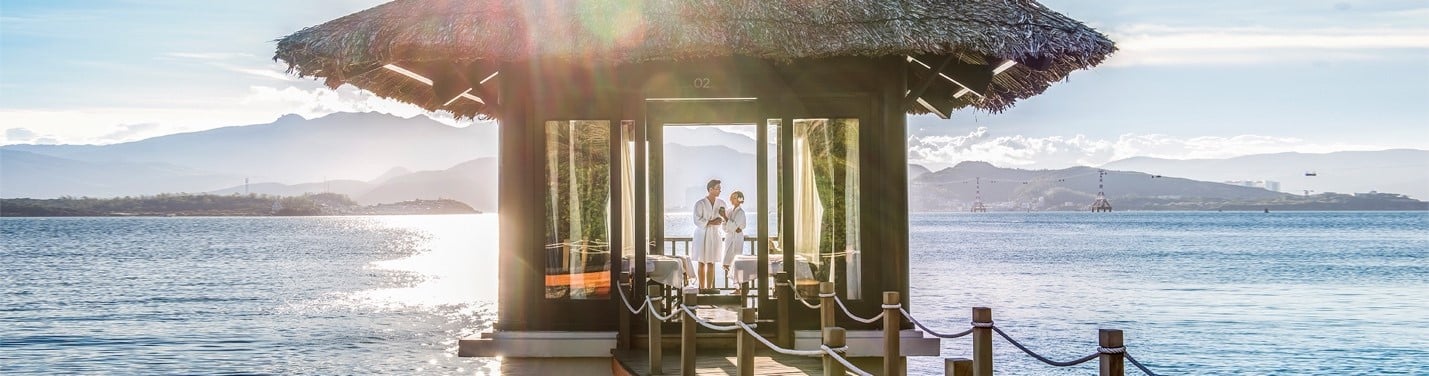
For your stay, consider the resorts and hotels of Vinpearl, which are scattered across Vietnam's most beautiful destinations. Vinpearl offers excellent facilities, professional service, and convenient access to local attractions. Many are located near the entertainment complexes of VinWonders, giving you a perfect blend of cultural exploration and modern fun.

Discover more about Vinpearl resorts & hotels






_1742996408_1743220457.jpg)
_1743220365.jpg)